You are standing in front of a shelf of candles with a candle warmer on the counter, and the question is suddenly not simple at all: does this one work? The big jar with the wooden wick. The three-wick candle that came in a gift set. The little tin from a weekend trip. A candle warmer heats wax instead of lighting it, and that changes which candles behave well — in ways that are not obvious until you have melted a few.
The good news is that the answer rests on one rule, and almost every candle either passes or fails it clearly.
The rule: heat lands on the wax surface
A candle warmer warms the wax from above. The container sits under a heat source, the top of the wax softens, and a liquid pool spreads outward until it reaches the glass. The wick is a bystander — it never lights, never burns, never matters.
That one fact sorts every candle question you might have:
- Anything about the wick — cotton, wooden, cracked, bent, drowned in old wax — is irrelevant. It is not part of the process.
- The container is everything. The wax surface needs to sit reasonably close to the heat, and the pool needs to be able to travel to the edge of the jar.
- Nothing burns, so there is no soot and no smoke — the air in the room stays clear.
So the real question is never "is this candle allowed on a warmer" but "will this jar let a melt pool form easily." That is a question about shape and size, and it has a predictable answer for each common style.
Candle types, one by one
| Candle type | On a warmer? | Why |
|---|---|---|
| Classic single-wick jar (soy or paraffin) | Yes — the design target | Shallow-to-medium jar, pool forms and reaches the glass in a normal session |
| Wide three-wick jar | With limits | The center melts but the far edges stay cold; a pool that never reaches the glass throws little scent |
| Tin candle | Yes, with a lower setting | The wax surface is shallow and close to the heat, so it warms fast — small volumes need less power |
| Wooden-wick candle | Yes | The wick is never lit, so wood vs. cotton changes nothing; you also skip the crackle entirely |
| Votives and pillars | Not directly | No container — melting wax has nowhere to pool; warm them on a dish or move to a jar |
| Jar with the lid on | Take the lid off first | A lid traps heat and blocks the surface; it is the single most common "my warmer does nothing" cause |
| Candles with glitter or embeds on top | Check first | Decorations sitting above the wax line can block the heat or melt into the pool |
Two rows in that table deserve more than one line, because they are the situations people actually get caught by.
The two exceptions worth knowing
Wide three-wick jars. These are the candles that look most generous and warm worst. A top-down heat source softens the middle, but the distance from the center to the far wall is long, and the edges of a wide jar stay cool. You get a puddle in the middle and a dry ring of wax at the glass — and a pool that never touches the edge releases far less fragrance than it could. If a wide jar is all you have, it still warms, just slowly; give it a longer session on a higher setting and expect the outermost band to stay firm. We went deeper into the geometry of this in why a candle warmer may not melt the wax.
Lidded jars. Candle jars often ship with a lid, and leaving it on while warming is the most common mistake in the category. The lid blocks the heat from reaching the wax and traps what little warmth gets through. Take the lid off every time — and while it is off, put it somewhere the cat cannot reach it.
What the wax type changes
Wax type matters less than the container, but it is not nothing. Soy wax is softer and releases fragrance differently from paraffin, so the same jar can throw scent at a different pace on the same warmer. Neither is wrong — it just means the same settings can behave differently across your shelf, and it is worth judging each candle by its own melt pool rather than by what the last one did. How the scent behaves once the pool is formed is its own topic, which we covered in how long a candle warmer's scent lasts.
A quiet bonus: old wicks stop mattering
Every candle owner owns at least one candle with a drowned, bent, or hopelessly short wick — technically fine wax that refuses to burn. On a warmer, those candles come back to life completely. The wick is out of the loop, so a candle that was written off as unburnable warms like new.
The same mechanism helps tunneled candles. A candle that burned down the middle has a ragged canyon instead of a flat surface. Warming it melts the top evenly from edge to edge, and the surface levels itself out again — which is one more way a warmer stretches the life of candles you already own, alongside the usual benefit that nothing is wasted on the walls of the jar.
Matching the warmer to the job
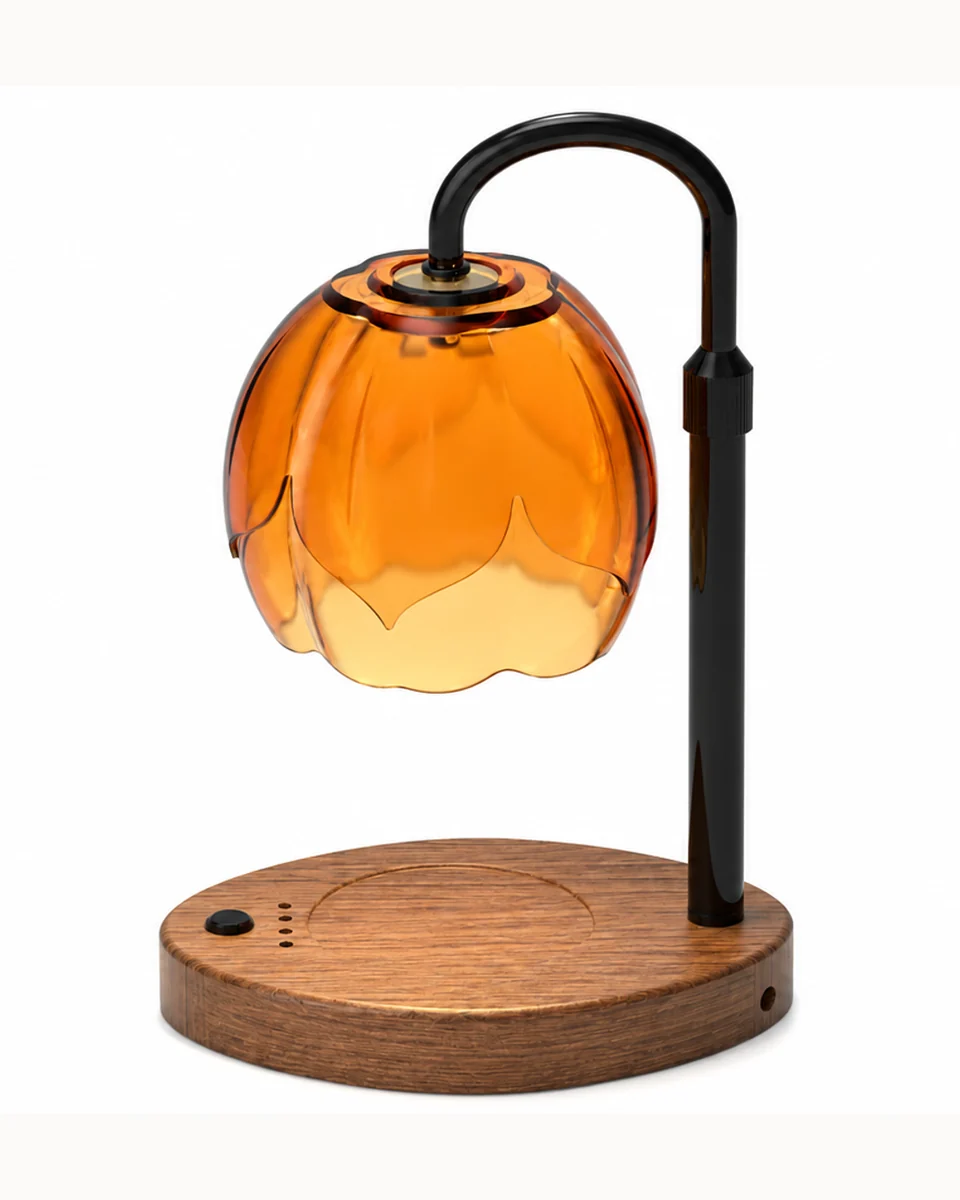
None of this requires an exotic machine — it requires even, controllable heat held long enough for the pool to form. That is the design brief we built around. The Color-Changing Candle Warmer uses a 50W ceramic element rather than a bulb, with heat at 60%, 80%, or 100% and an Auto mode that holds full power for the first 5 minutes — enough to establish the pool — then settles at 80% for the rest of the session. The timer runs 2, 4, or 8 hours, so a wide jar can get the long session it needs without anyone remembering to switch it off. It is designed for common jar candles, which — as the table above shows — is exactly where warmers do their best work.
One last practical note: warming is gentle on the candle, but it is not free to run around the clock. If you are wondering what a typical evening of warmth adds to the bill, we ran the numbers in do candle warmers use a lot of electricity.
FAQ
Can you use any jar candle in a candle warmer?
Most of them, yes — common jar candles are exactly what warmers are designed around. The two things to check are the jar's height (the wax surface should sit reasonably close to the heat) and its width (very wide jars melt slowly at the edges).
Does the wick matter on a candle warmer?
No. The wick never lights — heat from above softens the wax directly. Cotton wicks, wooden wicks, bent, cracked, or drowned wicks are all irrelevant on a warmer.
Can you put a tin candle on a warmer?
Yes, and tins warm quickly because the wax surface is shallow and close to the heat. Use a lower heat setting and shorter sessions so the small volume of wax does not get warmer than you want.
Will a warmer fix a candle that burned down the middle?
It can level the surface again. A warmer melts the top of the wax evenly from edge to edge, so a candle with a burned-down center comes back to a flat, even pool — no flame involved.