The question comes from a good place
People ask this because of candles, not warmers. The classic candle routine ends with a small anxiety: is it out? did the wick drown itself? did I just fall asleep with something burning? A flameless warmer is supposed to end that worry, so the natural follow-up is whether the old habit — lights on at dinner, still on when you wake up — finally became harmless.
Almost. The flame is gone. The heater isn't.
What actually happens if one runs all night
Two honest answers: one about the wax, one about the appliance.
The wax side is about fading, not danger. A warmer melts the top layer of the candle, and that layer carries most of the fragrance. After a few hours it has given up what it has, and the scent in the room quietly thins even though the plate below is still warm. You can read the full progression in our guide to how long a candle warmer's scent lasts — the short version is that hours six, seven, and eight add less than hours one and two did. An all-night session mostly wastes the wax you paid for.
The appliance side is the real reason to stop. "No open flame" answers the candle question, not the heater question. Our warmer's ceramic element draws 50 watts — modest, and the electricity math works out to pennies — but it is still a device whose whole job is being hot, sitting above a jar of wax, in a room where everyone is asleep. Every heating appliance deserves the same rule: someone conscious should know it is on. That is not a candle-warmer quirk. It is the same rule that keeps people from running space heaters, kettles, or electric blankets through the night.
So the honest answer to "can I leave it on overnight" is: the failure mode is unlikely, but the habit is still wrong, and there is a cleaner way to get what you actually wanted.
What you actually wanted was the timer
Nobody who asks this question wants to run a heater until sunrise. They want the evening version: dinner, a movie, a book, and the warmer still going when they drift off. That is precisely the job the timer was invented for.
| Timer setting | What it covers | When it earns its keep |
|---|---|---|
| 2 hours | Dinner plus coffee afterwards | A scent for the meal, off before bed |
| 4 hours | A whole evening | Movie night, a long work session, a bath-and-reading night |
| 8 hours | A full day at home | Weekend cleaning, a day of remote work, back-to-back guests |
The habit worth building is unglamorous: the timer is the default, not an extra step. Heat with a scheduled end removes the falling-asleep problem completely. If you nod off at hour three of a four-hour run, the warmer has already handled the ending for you.
How ours handles the overnight case
Our Color-Changing Candle Warmer was designed around this exact moment, so the mechanics are worth spelling out:
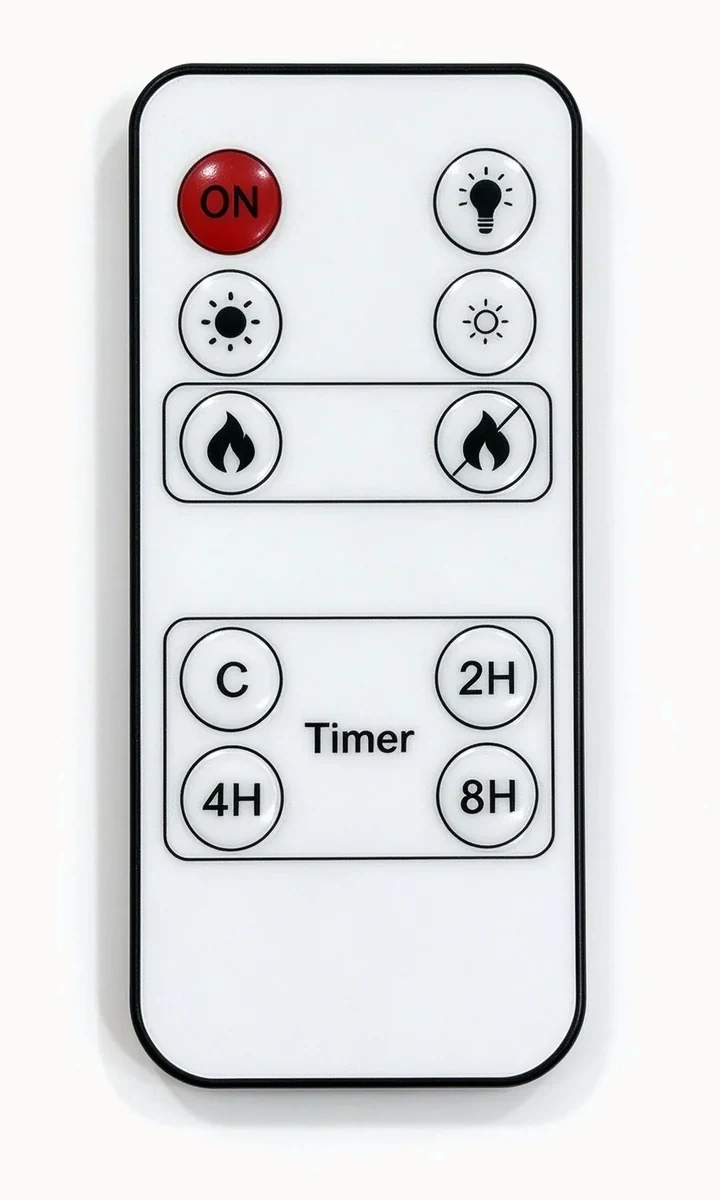
- The timer is on the remote. Two, four, or eight hours, chosen from wherever you are sitting — including from under a blanket, which is the position most people are in when this decision gets made.
- Heat and light end together. When the timer runs out, the whole device goes quiet. There is no lingering glow, no forgotten heater with the lamp still on above it.
- Auto mode paces the session. It runs at full power for the first 5 minutes to establish the fragrance, then steps down to 80% and holds there. The strongest hours come first, which matches how evenings actually go — and the reduced draw afterwards is kinder to the wax, too.
- It remembers your settings. Color, brightness, heat level. Tomorrow's session is one button, not a re-setup, because a timer you have to think about is a timer you will skip.
The realistic bedtime routine becomes: dinner, remote, timer, done. If you fall asleep mid-evening, nothing is left running by midnight.
The rules we actually follow
After months of living with these devices, the house rules reduced to four lines:
1. Every session gets a timer. Even the ones you plan to stay awake for. Habits hold better when they cost nothing. 2. Leaving the house beats any timer. We switch off before leaving, same as the stove. A timer covers falling asleep on the couch; it does not cover a grocery run that was supposed to take twenty minutes. 3. No marathon sessions out of habit. Eight hours is for the rare full-day-at-home occasion. Running it all day, every day, spends the wax on hours nobody is there to smell. 4. The flame question and the heater question are different. Our comparison of warmers versus burning candles covers the flame side — no soot, no smoke, nothing to blow out. The heater side simply inherits the common-sense rules every warm appliance already taught you.
None of this is a warning against the category. A flameless warmer removes the single worst failure mode candles had. It just asks you to treat it as what it is — a small, well-behaved heater — and let the timer do the vigilance for you.
FAQ
Can you leave a candle warmer on overnight?
We don't recommend it. A warmer has no flame, but it is still a 50-watt heater, and a heater running for hours with nobody awake nearby is the one scenario timers exist for. Set the timer so the heat ends on its own instead.
How long should you run a candle warmer at a time?
Most evenings need less than you'd expect: 2 to 4 hours covers dinner and the hours after it. Eight hours is for a full day at home, not for every night.
Does running a candle warmer longer make the scent stronger?
Not really. The top layer of wax releases its fragrance first; after a few hours the throw fades even though the warmer is still on. Longer sessions spread the same fragrance across more hours rather than making it stronger.
What does Auto mode do?
On our warmer, Auto runs the ceramic element at full power for the first 5 minutes to establish the fragrance, then holds 80% until the timer ends or you switch the heat off. It is a fixed program, not a thermostat.