The short answer
A wedding bouquet is the most common reason people end up looking for a shadow box. The flowers mattered enough to keep — and the instinct is to get them into a nice display immediately, while the day still feels close. That instinct is the main thing to unlearn, because a bouquet goes into a display in two separate stages, and doing them in the wrong order is what ruins keepsakes.
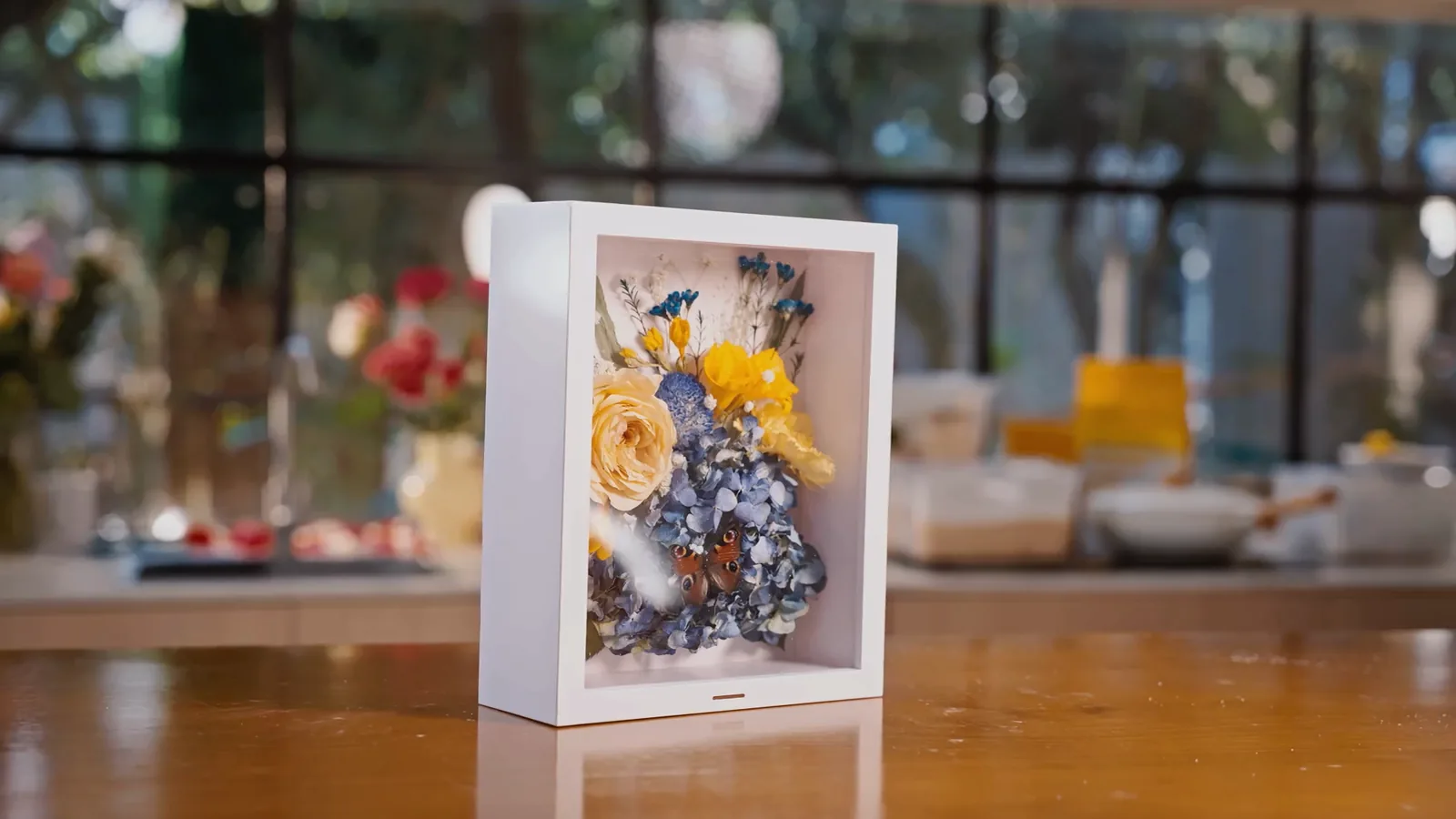
Stage one is drying: removing the water inside the stems and petals until the flowers are stable. Stage two is display: putting the now-dry flowers somewhere that protects them from the moisture, light, and handling that would slowly undo them. The Wisedry dried-flower shadow box belongs entirely to stage two. Its own product page is explicit about this: it is for already-dried flowers, and it is not a fresh-flower drying system.
Start while the bouquet is still fresh
The work of stage one happens in the first days after the event, and it starts with accepting what the flowers are doing: aging. Petals soften from the edges inward, colors drift, and anything with a watery stem — tulips, lilies — goes first. Nothing stops this except drying.
So the plan for the first couple of days is simple. Take the bouquet out of its wrapping, photograph it the way you want to remember it, and decide which parts are worth keeping. Then split the bouquet by flower type, because a mixed bouquet never dries evenly as one bunch. Sturdy flowers can hang; delicate or deeply colored heads do better in silica gel. Strip the leaves off the stems you are keeping — leaves dry unevenly and shed everywhere later.
One mistake worth naming: do not try to slow the aging by wrapping the fresh bouquet in plastic and putting it somewhere cold. Trapped moisture is exactly what dries flowers into a moldy clump instead of a keepsake.
What each flower in a typical bouquet will do
Bouquets are mixes, and the mix never behaves as one plant. Some of what lands in a wedding bouquet dries beautifully whole; some of it is best let go.
| Flower | How it handles drying | Verdict for a whole-head display |
|---|---|---|
| Roses | Dry well as whole heads; petals curl slightly and tones deepen | Keep — the classic keepsake flower |
| Hydrangea | Among the easiest; heads dry full and papery | Keep |
| Baby's breath | Dries quickly on its own; stays light and airy | Keep — fills gaps between larger heads |
| Eucalyptus and greenery | Hold shape and tone well | Keep — frames the flowers around them |
| Lilies | Petals drop as the flower fades | Keep loose petals only, pressed or silica-dried |
| Tulips | Too watery to dry whole with good results | Let go, or press a few petals |
This is also the point where the choice of drying method matters, and that decision has its own full walkthrough: the four common drying methods compared. The short version for a bouquet: hang-dry the sturdy heads somewhere dark with moving air — it takes patience, and it mutes color the most — and bury the colorful or delicate heads in silica gel, which keeps color best. You can combine both in one arrangement; plenty of displays do.
A timeline from event day to sealed display
| When | What to do | Why it matters |
|---|---|---|
| Event day | Unwrap, photograph, decide you are keeping it | Fresh flowers age from the moment they are cut |
| The first day or two | Split by flower type; strip leaves; start hang-drying or burying in silica | Early drying preserves the most of the bouquet |
| The drying stretch | Leave it alone in the dark, with air moving around hang-dried bunches | Rushing or light during drying costs color and invites mold |
| Before arranging | Check for fully dry petals and stiff stems; anything cool or soft still holds moisture | Sealing in leftover moisture is the mold scenario |
| Arranging day | Lay out the display to fit the space; work within the depth of the box | Shallow depth forces good choices — see below |
| Sealing day | Backing on, sealing strip pressed home, silica gel compartments filled | The enclosure takes over from there |
| Afterward | Glance at the front window now and then | Green silica means replace or reactivate it per the manual |
Fitting a bouquet into the display
Stage two starts with an honest look at what a shadow box actually holds. The Wisedry box lists at ten by eight inches with about two inches of usable inner flower depth — enough for a layered, whole-head arrangement, not for a full bouquet frozen mid-throw. Drying shrinks the heads, which helps; so does planning the layout before anything gets fixed in place.
Arranging is its own skill and there is a dedicated guide for it: how to arrange dried flowers in a shadow box. The compressed version: anchor with the largest heads first, fill with the airy material like baby's breath, and let the greenery set the edges. Anything that did not fit the whole-head plan — lily petals, a few tulips — can live in the display as pressed pieces or a small silica-dried cluster.
What the sealed box does after that
Once the backing goes on, the display's job is to hold the arrangement in the state you sealed it. That is a real job, worth being precise about. The one-piece molded body has no joints for moisture to travel through, the backing carries a full-perimeter sealing strip that closes the rim, and hidden compartments hold one hundred grams of indicating silica gel between them. The gel absorbs the moisture the air sealed in with the flowers, and the orange-to-green window in front tells you when it is time to replace or reactivate it.
What it does not do is promise that the flowers stay frozen in time. Flowers change in color and condition over years no matter how they are dried — the page says so plainly, and no fixed preservation lifespan is promised. What the sealed display changes is the pace and the causes: no damp air reaching the petals, no dust settling into the arrangement, nothing bumped or squeezed on a crowded shelf.
A bouquet that mattered enough to keep deserves that sequence in the right order: dry it fully, arrange it to fit, then seal it and let the box keep it that way.
FAQ
Can I put fresh flowers straight into a shadow box?
No. The [Wisedry shadow box](../../products/dried-flower-shadow-box/) is made for flowers that are already dried. Sealing fresh stems in just locks their moisture in with them — that is the recipe for the mold problem covered in [why dried flowers go moldy](../dried-flower-shadow-box-why-did-my-dried-flowers-go-moldy/).
How soon after the wedding should I start preserving the bouquet?
Within the first day or two if you can. Fresh flowers are on a clock from the moment they are cut — petals soften, edges brown, and lilies drop their petals first. The earlier the drying starts, the more of the bouquet survives to go on display.
What is the best way to dry roses for a shadow box?
Keep the heads whole. Hanging them upside down in a dark, dry room works, and burying the heads in silica gel keeps more of the original color. The full comparison is in [the four drying methods compared](../four-ways-to-dry-flowers-compared/).
Will the bouquet keep its exact wedding-day colors?
Honestly, no. Every drying method shifts color and shrinks the heads at least a little, and flowers keep changing slowly over time. Drying in the dark and displaying away from a sunny window slows the fading — see [how to keep dried flowers from fading](../how-to-keep-dried-flowers-from-fading/). No fixed preservation lifespan is promised.
Do I need to do anything after the box is sealed?
Very little. The front window shows the indicating silica gel; when it turns from orange to green it has absorbed moisture and should be replaced or reactivated following the supplied manual. That check is the whole maintenance routine.