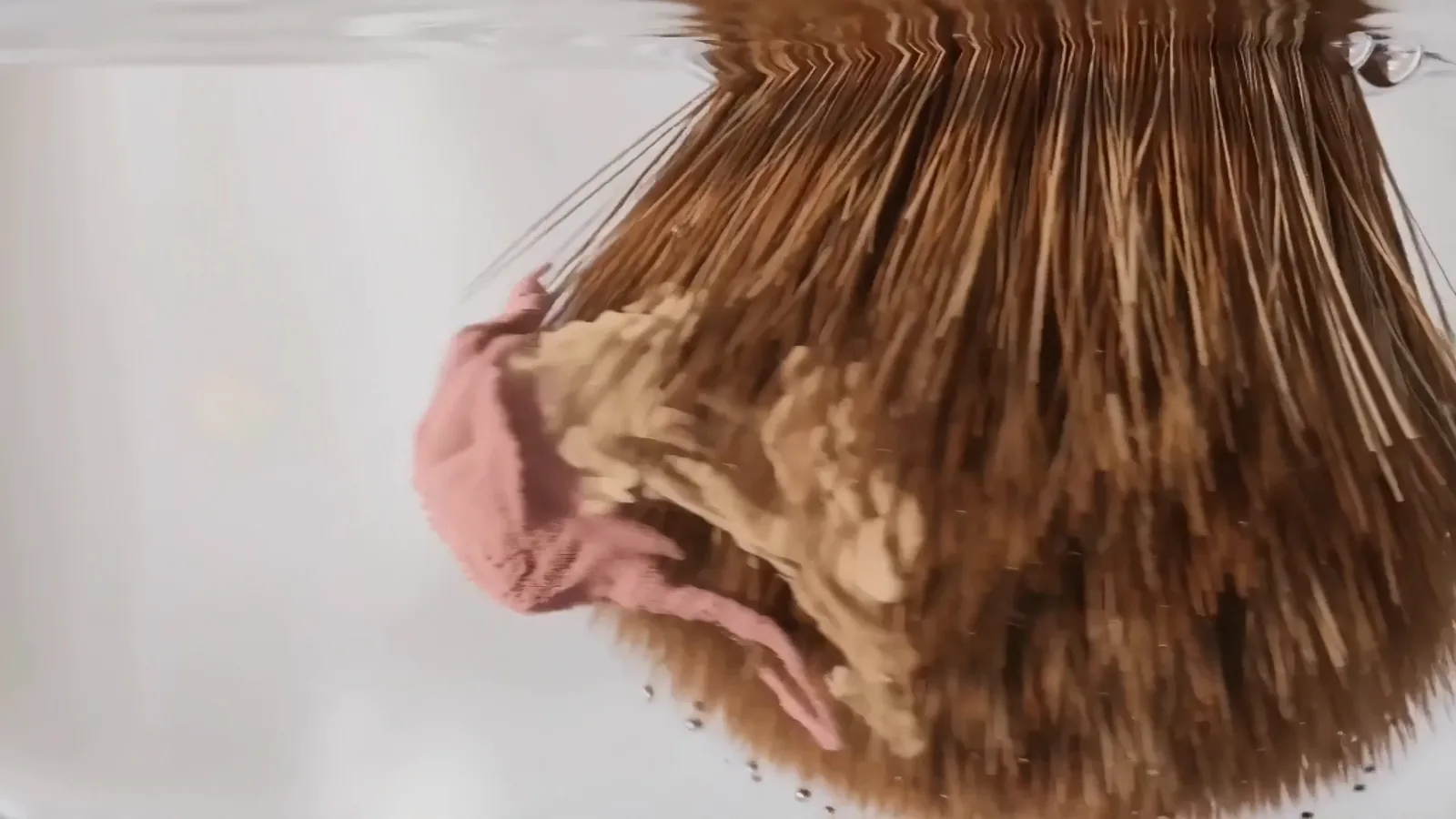
When breakouts show up, the shopping list of suspects usually goes: hormones, diet, a new moisturizer, stress, dirty pillowcases. Makeup brushes land somewhere near the bottom — and when they do come up, the claim usually swings between two useless extremes. Either the brush is the hidden villain behind every blemish, or it is irrelevant because you "rinse it sometimes."
Neither version helps. Here is what a used brush actually carries, how it interacts with your skin, and a way to test whether yours is part of the problem — without treating the brush as medical equipment or as a non-issue.
What is living on a used brush
A face brush collects three things every time you use it, and they behave differently:
| What collects on the brush | Where it sits | What rinsing does to it |
|---|---|---|
| Fresh product (foundation, concealer, cream blush) | Throughout the bristles, packing toward the base | Loosens some at the tips |
| Skin oils and dead skin cells, picked up from your face | Mixed into the product, dragged toward the root | Barely touched |
| Hardened residue — old product that has dried into a film | At the bristle root, the dense base near the ferrule | Essentially untouched |
The third row is the one that matters. Product near the tips dries and visibly changes how the brush looks, so people notice and wash it. Product at the root hardens invisibly, out of sight inside the ferrule, and stays there through casual rinses. Think about a concealer brush you have been using for months: every application drives a little more cream down toward the base, and water spinning around the outside of the clump does not move it. After a standard rinse, the brush looks fine — and the root is still carrying a compressed layer of old pigment and oil.
That mismatch between how a brush looks and what it holds is why the brush gets dismissed as a suspect. You cannot see the part that matters.
The mechanism: your brush touches your face every day
Whatever sits at the bristle root does not stay there. Each application presses the bristles against your skin and releases a small amount of what they hold — fresh product mixed with old residue. Day after day, the brush re-deposits a trace of material your skin already shed or rejected.
Two things follow from that, and both are observable rather than theoretical:
- Location. Breakouts that cluster along the zones your brush covers most — cheeks, jawline, the hairline where foundation blends out — are a pattern worth noting. A pillowcase is a nightly suspect too, but a brush is a twice-daily contact point, and the geography of where it touches is knowable.
- Timing. If your skin's behavior changed a few weeks after you started a new cream product — foundation switched, a concealer you use daily, cream blush added — the tool that carries that product daily is a reasonable thing to check alongside the product itself.
This is the honest version of the claim: the brush is not proven to be the cause of anyone's breakouts, and skin is too individual for any single factor to wear that title. But a dirty brush is a daily, repeated input to the exact skin you are worried about, and unlike hormones, it is an input you can clean in ten minutes and observe the difference.
The 60-second check, before you blame your skincare
Two tests, both free, both done in under a minute:
1. The tissue swipe. Take the brush, supposedly clean, and swipe it firmly across a white tissue or paper towel. If any pigment transfers — a gray, beige, or pink smear — the bristles are holding old product, and that same product is what your face receives next application. 2. The pinch test. Pinch the bristles near the base, right where they enter the ferrule, and rub gently between your fingers. A clean root feels smooth and soft. A crusty, waxy, or greasy feeling at the base means hardened residue that no amount of tip-rinsing has touched.
If both come back clean, the brush honestly earns an alibi and you can move down the suspect list. If either fails, you have found residue that transfers to your face daily — and you also have a baseline: clean the brush properly, keep everything else constant, and see whether the pattern shifts over the following weeks. That before/after comparison is worth more than any general advice, because it tests the hypothesis on your own skin.
One caution cuts the other way too: do not over-wash in response. Aggressive daily scrubbing with hot water and harsh soap damages bristles and can irritate skin on its own. A steady weekly schedule with a proper deep clean beats panic washing — the case for weekly cleaning covers how to set that rhythm.
What actually removes root residue
The check above usually ends with the same discovery: the root is filthy, the tips are fine, and the rinse method that people use — swirl the head in soapy water, squeeze, dry — cleans the visible part and leaves the base alone. The reason is mechanical, not about effort. Rinsing moves water around the brush. The hardened film at the root is packed densely enough that passing water does not break it up.
Removing it requires force applied where the film sits — motion driven directly into the bristle base rather than around the outside. That is the whole idea behind percussive brush cleaning, which is the approach the LARKBIRD Brush Cleaner Pro takes: high-frequency impact delivered into the bristles so root-level buildup shatters and releases, instead of spin-and-hope surface cleaning. The same page covers the pinch test as the after-clean proof — pinch the root once the machine finishes, and you will know immediately whether it is actually clean.
Whichever method you use, two habits decide whether the residue comes back:
- Dry position. A brush dried flat or tip-up traps moisture at the base, which is exactly where leftover film and dampness combine into the sour smell that signals bacterial growth. Dry it tip-down or on an angle so gravity works for you.
- Root-first washing. When you wash by hand, work product backward out of the base — pinch and roll the bristles from root to tip under the suds, rather than swishing the head around. The foundation-out routine walks through that step by step.
The bottom line
A dirty makeup brush will not single-handedly explain breakouts, and anyone who tells you a cleaner brush replaces skincare is selling something. But the brush is the one suspect you meet twice a day, the residue it carries is invisible and sits exactly where rinsing fails, and the test costs sixty seconds. Run the tissue swipe and the pinch test. If the brush fails, clean it at the root and watch the pattern. If it passes, you have honestly eliminated a variable — and both outcomes move you forward.
See the LARKBIRD Brush Cleaner Pro for the percussive approach to root-level cleaning, or browse more brush care guides.
FAQ
Can a dirty makeup brush really cause breakouts?
It can contribute, and dermatologists consistently list brush hygiene among the factors worth ruling out — but it is rarely the only cause. A used brush carries old pigment, skin oils, and residue that transfer back to your face with each application, so it is one input your skin meets every single day.
How do I know if my brush is part of my skin problem?
Look at location and timing. If breakouts cluster along the areas your brush covers most — cheeks, jawline, hairline — or if application quality has quietly gotten worse, run the tissue swipe and pinch test on the brush before changing products.
Does rinsing my brush with water clean it properly?
Rinsing cleans the tips. Foundation and concealer harden into a film at the bristle root, near the ferrule, where water moving around the outside does not reach. That is why a brush can look clean and still be carrying residue.
How often should I wash my brushes if I am breaking out?
Dermatologists generally recommend washing makeup brushes roughly weekly. If you are actively trying to rule the brush out, tighten that schedule for a few weeks and watch whether the pattern changes — that is more informative than any single deep clean.
What actually removes the hardened residue at the root?
Force applied at the root. Rinsing moves water around the brush; percussive cleaning drives motion directly into the bristles so the hardened film at the base breaks up and releases. The pinch test after cleaning tells you whether the root is actually clean.