You waited the full week, opened the press, and found petals the color of weak tea instead of the flowers you picked. Browning is the most common failure in flower pressing — and the most fixable, because nearly every case traces back to a single cause: moisture that never left the flower.
When water lingers inside petal tissue while the press holds everything flat, the tissue breaks down and turns brown instead of drying into a clean specimen. So the diagnosis is simple: find where the water got trapped. There are only five places it happens.
Match your batch to the cause
| What you see | What went wrong |
|---|---|
| Even tan color across the whole flower | The bloom was tired or wilting before it went in |
| Brown blotches over petals that still feel cool or damp | The drying paper gave out mid-press |
| Brown spots where petals overlapped | Moisture trapped in the overlap |
| Dark slimy patches and a musty smell | That is mold, not simple browning |
| Fine when it came out of the press, brown weeks later | Storage — humid air and light found it |
Each cause has a specific fix, and none of them involve pressing harder or waiting longer.
The flower went in tired
Pressing does not improve a flower; it preserves whatever condition it was in. Wilted flowers press wilted. A bloom cut three days ago, or one rescued from a vase that had already turned, has started breaking down before the press ever closes — and the press will hold that state, brown and all.
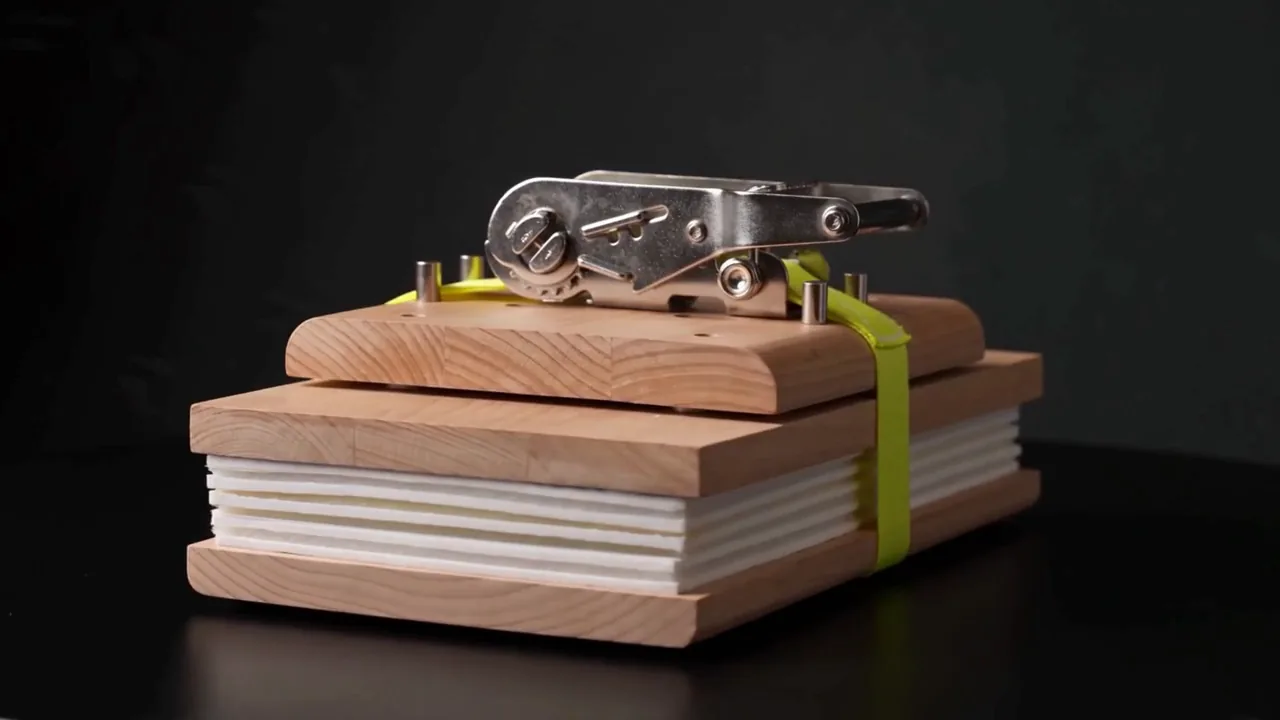
Pick flowers at their peak and press them the same day. Fresh-cut blooms go in with full moisture in the right places and the color still locked in. The ratchet flower press travels as one piece with nothing to bolt on, so pressing right after cutting is realistic rather than aspirational — cut in the garden, layer at the table, strap it down, done.
The paper stopped pulling
The blotting boards are what actually dry a pressed flower. Pressure holds the stack flat, but the boards pull the water out. Blotting boards lose absorbency as they work — that is the job — and once they are saturated, they stop pulling. From that point the moisture just sits in the petal, and blotches follow.
Two habits prevent it:
- Recharge the boards between batches. They can be recharged on their own in a microwave or oven, following the user guide. Never leave them heating unattended, and never put the press itself in — it has metal parts.
- Keep the layering as designed. The kit pairs foam sheets, lining paper, and blotting boards because each layer does a different job. Swapping in ordinary printer paper is a classic false economy — it traps moisture against the flower instead of pulling it out, which is precisely the browning mechanism you are trying to avoid.
If a batch came out blotchy and cool to the touch, check the boards first. Tired boards are the most common equipment-side cause, and the cheapest to fix.
The pressure drifted
Flowers shrink as they lose moisture. The stack loosens with them — and flowers in a loosened stack dry slowly and unevenly, with slow browning wherever moisture lingers. This is why re-tightening at every check matters more than any single setting on day one.
This is also where press designs separate. A screw press concentrates force at the bolt locations; the pressure pockets that result leave brown spots where the force crushed and pale, wrinkled edges where it barely reached. A strap that wraps the whole stack and spreads the pull across the board keeps every flower under the same pressure — and re-tightening is one pull on the handle instead of four wing nuts. If you are still comparing designs, how a ratchet flower press works covers the mechanics.
The flower was too thick for the layer
A press is built around flat, single-layer flowers and thin stems — that is what dries cleanly inside it. Thick, watery blooms pressed whole hold too much water for the process; they brown or mold before they ever dry, in any press, under any strap.
Thick blooms are not off-limits — they just need prep. Trim the petals off a rose or lily and arrange them flat in a single layer, and they press beautifully. What fails is the whole wet bloom, and mixing it into a layer of thin flowers: the flat viola finishes in days while the fleshy geranium beside it is still wet and turning brown. Keep flowers of similar thickness on the same layer, and expect the thick ones to take the long end of the pressing timeline.
The browning that starts after the press
Some flowers leave the press perfect and brown weeks later. Pressed flowers are hygroscopic — they pull moisture back out of the air — so a sealed frame hung in a steamy bathroom or a specimen taped to a sunny windowsill slowly undoes the drying.
Storage is part of pressing: keep finished flowers airtight, away from light and damp. Stored that way, the color that came out of the press is the color that stays. And if the spots come with a musty smell, that is no longer browning at all — that is mold, and it has its own playbook.
Can a browned batch be saved?
Honest answer: the brown will not turn back. What you can do is stop it from progressing and put the rest of the batch right:
1. If petals still feel cool or damp, re-press them against fresh, dry blotting boards and check again in two days. Drying finishes the job; browning halts once the moisture is gone. 2. If they are papery and completely dry but tinted, they are stable — they will not get worse in storage. Warm-toned flowers work well in crafts where the vintage look is the point. 3. If the color mattered, compost the batch and start fresh. A new batch is days away, and every cause on the list above is now a checklist item instead of a mystery.
The bottom line
Brown pressed flowers almost always mean trapped moisture, and there are only five places it hides: a tired bloom, spent paper, drifted pressure, a flower too thick for its layer, or humid air after pressing. Start with peak-fresh flowers, keep the boards dry and the stack snug, press thick blooms as petals rather than whole heads, and store the results airtight and dark.
Do that, and the flowers that come out of the press are the ones you put in — just flat.
See the Wisedry Ratchet Flower Press.
FAQ
Why did only some of my pressed flowers turn brown?
Mixed thickness in one layer is the usual culprit. A flat viola and a fleshy geranium dry at different speeds, and the wetter flower browns while the other is already done. Overlapping petals cause the same effect — the overlapped spot stays thicker and damp longer.
Can slightly browned pressed flowers be saved?
The color will not come back, but you can stop it getting worse. If petals still feel cool or damp, re-press them against fresh, dry blotting boards until they pass the touch test. Once they feel papery and completely dry, they are stable — store them airtight, dark and dry.
Does silica gel stop pressed flowers from browning?
Silica gel is a drying alternative for blooms that struggle in a press, like very thick or waxy flowers. For flat, single-layer flowers, dry blotting boards, even pressure and a cool, dry room do the same job inside the press.
How do I stop pressed flowers browning after I take them out?
Pressed flowers pull moisture back out of the air. Store them airtight, away from light and damp — a sealed box in a dry drawer works. Humid bathrooms and sunny windowsills are where browning restarts.
Why are the edges of my pressed flowers brown but the centers fine?
Edges sit closest to the paper and dry first, so they show problems sooner — paper that saturated at the rim, petals hanging over the edge of the layer, or pressure that concentrated in the middle and left the edges loose.