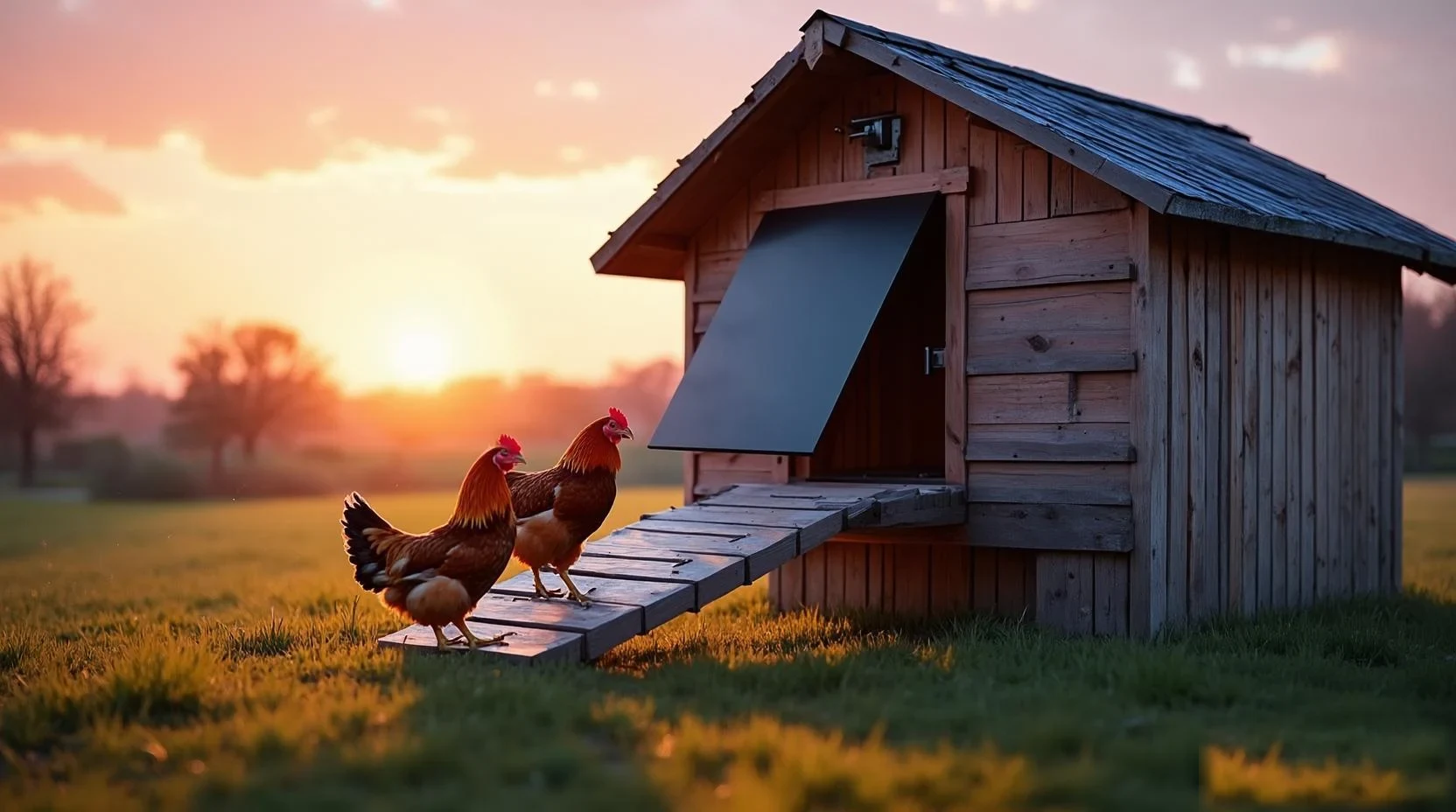
A hen that won't roost inside is making an argument
Chickens come with one piece of software installed: at dusk, go to the highest safe spot you know. On a normal evening the whole flock files through the pop door before full dark without being asked. So when a hen stands in the run after dark — or half the flock does — something at the coop has lost the argument.
The mistake most keepers make is treating it as stubbornness and chasing birds around the run with a net every night. The behavior has a cause, the cause is almost always on this short list, and the fix is boring in the best way.
One more thing worth noticing before anything else: *who* is refusing. One young hen pacing outside is a training problem. The whole flock hesitating at the door is a coop problem. Those have different fixes, and the order below runs from most common to least.
Work through the causes in this order
| What you see | Likely cause | What to do |
|---|---|---|
| One or two young or new birds pace outside after dark | They never learned the roost | Carry them in at full dark for a few nights; the habit usually sticks within a week |
| One hen gets pushed off the bar every night | Pecking-order bullying, roost space too short | Add roost length — plan roughly 8 to 12 inches of bar per bird — and give a second bar |
| A hen sleeps in a nest box instead | She has claimed it as a roost | Darken or block nest boxes at dusk; re-train with carried-in bedtimes |
| Birds restless at night, scabs near the vent, hesitant at the door | Mites or lice in the roosts | Inspect after dark with a flashlight; clean roost bars and coop surfaces thoroughly |
| Nobody wants in; air smells sharp, windows drip | The coop is stuffy or damp inside | Add ventilation above roost height and keep bedding dry — chickens avoid a stale coop |
| Hesitation right at the doorway itself | Dark or cramped entry, awkward ramp | Brighten the approach, check the opening fits your largest bird, ease the ramp angle |
| Refusal started when you moved or rebuilt the coop | The old roost habit broke | Re-train as if they were new birds — a few carried-in nights |
Go top to bottom. In backyard flocks the first three rows explain most cases; the doorway row is the one people forget entirely.
The flock side: new birds and bullies
A hen that has never used your roost does not know it exists yet. Carrying her in at full dark sounds almost too simple, but it works because roosting is learned from the flock and from repetition — she wakes up on the bar, and the bar becomes the bedtime address.
Bullying is the quieter version of the same problem. A bottom-of-the-order hen who gets pecked off the bar every evening will test alternatives, and an open nest box is right there. Watch one full dusk from a distance: if she approaches the door, hesitates, and circles back when another hen moves toward her, you have your answer. More roost length and a second bar at a different height usually settles it without any intervention at all.
The coop side: what dusk feels like from inside
Chickens avoid coops that smell wrong. Poor ventilation leaves ammonia and moisture hanging at roost level, and a bird that already has a marginal opinion of the coop will start weighing the run's fence posts as a bedroom. The fix is airflow high above where birds roost — a draft at ankle height is the thing to avoid, not airflow itself.
Then there are the boarders. Roost mites hide in bar joints by day and feed at night, and a coop that has become the bad restaurant gets avoided. A flashlight inspection after dark tells you quickly: look along the underside of the bars and at vent areas. Whatever you find, clean the structure thoroughly — the birds will return to a roost that stopped biting them.
The doorway gets overlooked
Sometimes nothing is wrong with the coop and everything is wrong with the last 18 inches of the journey. A pop door in deep shadow reads as a hole, not an entrance. A ramp too steep for heavy breeds makes entry feel like a workout at the end of the day. And an opening sized for bantams makes a large hen hesitate every single time.
Size is a spec worth checking before buying any door, automatic or not. The LARKBIRD Smart Coop Door's opening measures 8.5″ × 11.4″ (21.6 × 29 cm) — a standard pop-door size that full-size backyard breeds walk through without a second thought. If your current doorway is smaller or darker than that, widen and brighten it before blaming the birds.
Then make dusk run without you
Here is the part that matters even after you fix the cause: every one of these problems gets worse when the door's schedule depends on a human being home at sunset. A missed evening because of traffic, weather, or a long dinner means a coop standing open all night, and one bad night can undo a week of re-training.
This is the actual job of an automatic door, and it is where a schedule built on your location's real sun times earns its keep. The LARKBIRD door opens a set number of minutes after sunrise and closes a set number before sunset, calculated from where you live — so dusk is handled at the same minute every night without seasonal reprogramming, and you can shift the offsets up to 60 minutes either way if your flock's routine prefers it.
The evening check shrinks to a glance: the app shows the door's current state and its recent moves, and every door event lands in a log — the last 50 events stay on the unit. If the door ever stalls on something, it backs off and retries before alerting your phone, so a stuck door is a notification rather than a silent guess. And if a stubborn hen is still in the run at closing time, you tap to reopen from wherever you are, let her in, and lock up again from the same screen.
Fix the argument first — the training, the bullies, the mites, the doorway. Then let the door make dusk boring. Boring is the goal.
Read next
- Raccoon-proofing your coop: the checklist — what an open door costs after dark
-
FAQ
Will my chickens eventually go in on their own?
Usually yes. Young birds and new arrivals settle in within days once the coop is calm and the routine is steady. A standard trick: carry each reluctant bird in at full dark for a few nights. Roosting is habit, and a week of consistent bedtimes resets it.
Should I leave the coop door open at night in summer?
No. Summer is when raccoons, weasels, and snakes work hardest, and an open door undoes every other precaution. Ventilation should come from high vents or open windows above roost height — not from the pop door.
What time do chickens go in at dusk?
As the light fades — roughly the half hour before full dark. That instinct is what makes a door that closes at or just after sunset work so well: the flock is already on the roost when the door moves.
Why does only one chicken sleep outside?
It is almost always a status problem. The bottom hen gets pushed off the roost, or a hen has decided a nest box is her spot. Add roost length, darken or block nest boxes at night, and re-train her with a few carried-in bedtimes.
Can an automatic coop door fix hens that won't go in?
It cannot make a hen walk through the door — fix the cause first. What it does is remove the human variable from dusk: the door closes on your location's real sunset every night, you can confirm it closed from your phone, and if a hen is still outside, you can reopen it remotely, let her in, and lock up again.