Two different machines on the same shelf
Winter arrives and the store shelf offers two ways to buy warm hands, and they look interchangeable: a pair of gloves, or a box of little pouches. They are not interchangeable. A disposable hand warmer and a rechargeable heated glove make heat by completely different means, deliver it to different places, and run out in different ways. Picking the wrong one doesn't just waste the purchase — it leaves you cold in exactly the situation you bought it for.
The deciding question turns out to be narrower than "which is better?" It is: how many days a week are your hands actually cold?
How a disposable hand warmer makes heat
Tear the wrapper and a one-way chemical reaction kicks off: iron powder, a little salt and water, oxygen from the air. The warmth you feel is essentially controlled rusting — and rusting only goes forward. Exposure to air starts it. Nothing pauses it. When the iron is spent, the pack is finished, and the pack goes in the trash.
That chemistry explains every strength and every annoyance you'll notice in real use. It works with no batteries, no charger, no buttons — which makes it perfect for dropping into a mitten, a boot, or a coat pocket on the way out the door. But it also means you can't turn it down, can't turn it off, and can't save the unused half for tomorrow. And the heat lands wherever the pack sits — usually a palm, or the back of a curled hand — not at the fingertips that are actually doing the work. That placement problem is the same reason ordinary gloves leave fingers cold: insulation and pocket heat warm the mass of the hand while the working ends go without.
How a rechargeable heated glove makes heat
A heated glove runs a small battery through thin elements sewn into the fabric. The heat source is under your control in a way chemistry never is: press a button to switch it on, choose how warm, switch it off when you come back indoors. Our liner runs three levels — 104°F, 122°F, 140°F — with warmth perceptible within about ten seconds of pressing the button.
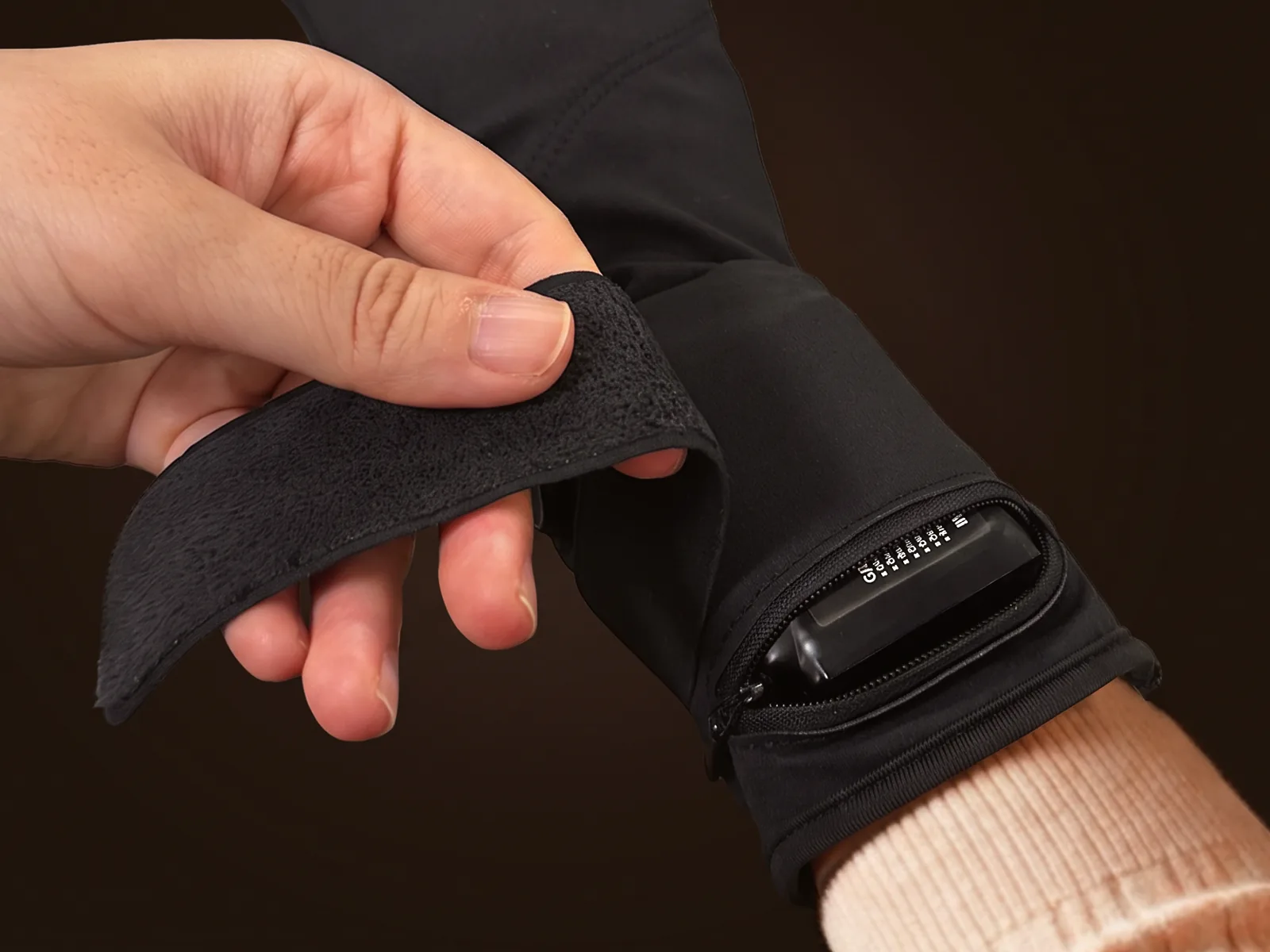
Placement is the other half of the difference. The elements wrap the back of the hand and run up both sides of all five fingers — the surfaces that actually face cold air while you work — rather than pooling heat in one spot under your palm. And the battery is a consumable you recharge rather than a pack you re-buy: four batteries ship in the box, two full pairs, with a dual-head charger so the spare set is always ready. When a pair runs flat you click in the other one and keep moving — why the mid-day shutdown happens on two-battery gloves, and why four is the structural fix.
Side by side
| Disposable hand warmers | Rechargeable heated gloves | |
|---|---|---|
| Heat source | Iron powder oxidizing in air — one-way reaction | Battery-driven elements in the fabric |
| Where heat lands | Wherever the pack sits — palm, pocket, boot toe | Back of hand plus both sides of every finger |
| Control | None: on when unwrapped, off when spent | Levels you choose; off when you don't need it |
| When it ends | Reaction spent — single use, then trash | Pair runs flat — swap the spare, recharge |
| Ongoing supply | Re-buy box after box, all winter | Charge between uses; batteries included |
| Indoors at a desk | Awkward — you're holding a pouch | Built for it: thin liner, touchscreen fingertips |
| Best fit | Occasional outings; backup in the glove box | Cold hands as an everyday, indoor reality |
Where disposables genuinely win
Credit where it's due, because disposables are not a lesser product — they are a different one.
For occasional cold — a stadium game, a winter walk, the first hard freeze of the year — they are close to perfect. Nothing to charge, nothing to commit to in advance; one pouch works in a mitten and another in a boot. Sealed, they tolerate a year of being forgotten in a glove box, and a spare can be handed to the friend who underdressed. If your hands go cold on a handful of days per season, a heated glove is a machine you simply don't need — buying one for that use pattern is the actual waste.
Where gloves win
The comparison flips when cold hands stop being an event and become a schedule.
For some people cold hands are an occasional nuisance. For others — including people living with Raynaud's — they are an all-day, indoors, every-weekday reality. In that life the disposable math collapses: a pouch in each pocket every day, all winter, re-bought forever, and it still solves nothing at a keyboard, where the cold is in your fingers on the keys — not in your pocket.
A rechargeable liner is built for exactly that weekday. Heat at the level you choose, on when you step out, off at your desk if that suits the room. Thin enough that typing still works — bulk is the whole reason thick outdoor heated gloves fail indoors. And the battery stops being a daily limit once there are two pairs: one on your hands, one on the charger, alternating. Whether that carries a full workday is a question with a design answer.
So which one should you get?
Ask the frequency question honestly:
- A few cold days a season. Disposables. They are the right tool, and gloves would be overkill.
- Most cold weekdays, especially indoors. Gloves. The re-buying never ends, and the desk problem never gets solved by a pouch.
- In between. Gloves as the daily machine, one box of disposables as the glove-box backup.
One honest note if you go the gloves route: the category varies a lot, and price tags hide the differences that matter. Before buying any pair — ours included — check four things. Where the elements actually reach: back-of-hand-only layouts are common, and ours deliberately run up both sides of all five fingers. How many batteries are in the box: two pairs beat planning your day around a wall outlet. How thick the build is: your fingers still have to work. And whether it reads as an ordinary glove or as ski equipment, because you will wear it in front of people. Ours were designed around those four answers: heat across the back of the hand and both sides of all five fingers, 104–140°F in three levels, warmth within about ten seconds, four batteries with a dual-head charger, a double-brushed knit thin enough to keep typing in, and a silhouette that looks like any other winter glove.
The full specifications — and an honest account of what's confirmed versus still being verified on the first production run — are on the Heated Liner Gloves page.
FAQ
Can you reuse disposable hand warmers?
The air-activated kind, no. The heat comes from iron powder oxidizing — a one-way chemical reaction that starts the moment the wrapper comes off and ends when the material is spent. Sealing a half-used pack in a jar slows it down but doesn't reset it. (Some gel packs are reusable by boiling — different product, different chemistry.)
Do disposable hand warmers expire?
Yes. They react with air, so the sealed wrapper is the whole shelf life. A pack that leaked or opened in a drawer can be half-spent before you ever use it — which is why an old warmer sometimes barely warms.
How warm do heated gloves actually get?
Ours run three levels — 104°F, 122°F, 140°F — with warmth you can feel within about ten seconds, across the back of the hand and both sides of all five fingers. You pick the level and turn it off when you don't need it, which a chemical pack never lets you do.
How long do heated gloves stay warm on a charge?
Runtime depends on the level you run, so honest numbers come from measured tests, not brochure lines. We measured heat-up, levels, and charging on pre-production samples and are re-confirming on production units before we publish figures. The design answer is structural: four batteries come in the box — two pairs — so a flat set swaps out in seconds and the day doesn't stop for a charger.
Can you wear heated gloves indoors while you work?
That is exactly the job a thin liner is built for. Bulk is the usual blocker — see [whether you can actually type in heated gloves](../heated-gloves-can-you-type-in-heated-gloves/) — and indoors, weatherproofing buys you nothing at a desk.